At our open day, this was the question we heard most often, right after the price itself: once you know what training costs, how do you pay for it? The cost of pilot training is published on this site, item by item. This article covers the other half of the subject: the practical ways to finance it, as we see them work for our students.
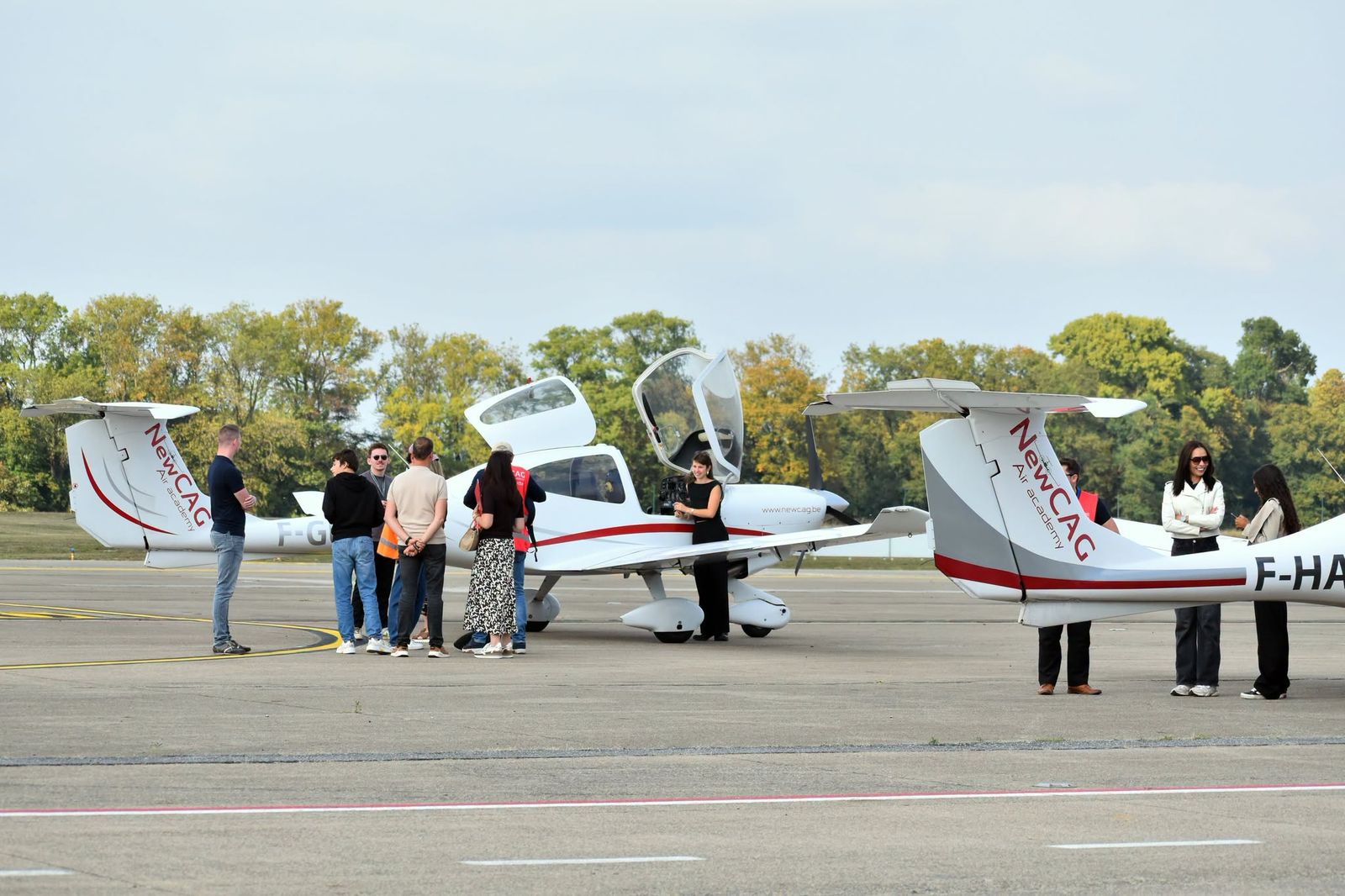
Photo: Robert Colin.
The school’s model changes the problem
There is no lump sum to pay on enrolment. Each student funds a personal account, with the balance and every movement visible online; courses and flight hours are charged to it as the training progresses, and the balance simply has to stay positive. The direct consequence: financing your training does not mean gathering the full capital before you start — it means sustaining a regular effort for the duration of the course. That is a different problem, and for most candidates a far more manageable one.
The modular path reinforces this logic: each module — private pilot licence, ratings, ATPL theory, commercial licence — is paid for when it is taken and leads to a qualification you keep for good. You can therefore decide module by module whether to continue, in light of your results, your finances and the state of the job market.
Training while you work, working to train
This is the route most of our students take: keeping a job and spreading the training over two to three years. Evening theory courses, distance-learning ATPL theory and flights planned around each student’s availability make this a realistic arrangement. Financing then takes the form of a dedicated monthly saving, sized to the flying rate you are aiming for — with one golden rule: regular flying is what makes training efficient, and therefore what determines its final cost. A sustainable pace held over time beats an ambitious start followed by interruptions.
For young candidates with no income yet, the same principle works the other way round: a job on the side — a student job, part-time work — lets you put money aside and pay for the modules as you go. It is slower than a loan, but every flight hour is then paid for and definitively yours, and the project moves forward without debt.
A word about distance-learning theory: it suits the working adult, already used to the self-discipline it demands. To young candidates we recommend classroom courses instead: the obligation to attend, the group effect and the mutual support between classmates do a great deal to keep motivation up over time — and theory completed at a steady pace is also money saved.
Bank loans
Some candidates top up their own funds with credit. Belgian banks offer training finance in various forms; terms depend on the bank and on your file. Three pieces of advice drawn from experience: borrow only part of the budget, keeping some saving capacity to absorb a schedule that slips; prefer a progressive release of funds, aligned with your actual flying rate, over a single payout; and present a precise file — our published prices let you build a complete costing of your project, which we are happy to confirm in writing to support a loan application.
A word of caution we owe our students: pilot training is a significant investment aimed at a job market that fluctuates. Taking on debt for the whole course before your first flight means giving up precisely the flexibility the modular path offers.
Public support and family help
Public training-support schemes rarely cover pilot training; if you believe your situation qualifies, check it case by case with the competent regional body before writing it into your budget. Family support, on the other hand, is common — and the modular model makes it easier to frame: a relative can finance one specific module, the private pilot licence for instance, without committing to the whole course. Whatever form it takes, a written schedule avoids misunderstandings and gives the project the seriousness it deserves.
Three rules of prudence
First, budget on realistic assumptions: the regulatory minima are minima, and a margin of hours beyond them belongs in any honest budget. Second, fund your account at the pace of your progress: there is no reason for your money to sit on a training account months in advance. Third, keep a reserve for the fees paid to third parties — exams, the medical, licences — and for the unexpected: pausing cleanly between two modules is recoverable; financing that breaks down mid-module costs far more.
Come with your questions
The financing plan is as much a part of the project as the choice of course. If you are preparing yours, ask us your questions: we will cost your project on the basis of our published prices — and we will also tell you what we advise against.